


Kelly Wright
CNC (Certified Nutrition Consultant - pregnancy, postpartum & baby nutrition), Certified Holistic Nutrition Coach
In Part 1 of this series, we explored four key nutrients:
- Iron
- Vitamin D
- Choline
- Folate
But these aren’t the only nutrients that mothers need to be mindful of. In this article, we’ll look into more detail at:
- Vitamin B12
- Magnesium
- DHA (Omega-3 Fatty Acids)
- Iodine
Despite their importance for maternal health and fetal development, deficiencies in these nutrients are still surprisingly widespread, and their effects can ripple into both short-term pregnancy outcomes and long-term child health.
Vitamin B12
Vitamin B12 plays a crucial role in a healthy pregnancy and fetal development; yet, deficiency is common and often overlooked.[1] Low levels have been linked to a higher risk of:
- Neural tube defects
- Gestational diabetes
- Preeclampsia
- Recurrent pregnancy loss
- Lower birth weights[1]
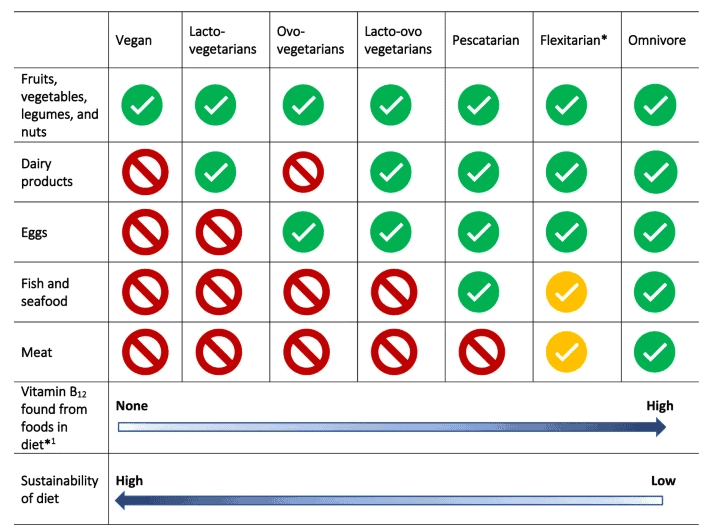
Because B12 is found only in animal-derived foods, women following vegetarian or vegan diets are particularly vulnerable to deficiency.[2]
B12 is found only in animal-derived foods
Pregnancy raises the body’s B12 needs, and low levels can be missed. The review by Rashid and colleagues notes that plant-based eating patterns are becoming more common.[3]
RELATED — What is a plant-based diet: Vegan or Vegetarian?
In the UK Food and You survey, adults who reported never consuming dairy rose from 2% to 5% between 2012 and 2018, which increases the risk of low B12 for some women.[3]
To reduce this risk, the authors recommend two practical steps:
- B12 testing in pregnancy for at-risk women
- prophylactic B12 supplementation around conception and in early pregnancy for high-risk groups
Although the body can store B12 for years, these stores can be depleted quickly once you become pregnant, making regular top-ups through food or supplements essential.
RELATED — Health Risks of Long-Term Vegan and Vegetarian Diet (Part 1)
Poor maternal B12 status is especially concerning when paired with high folate levels, as this imbalance may mask symptoms of deficiency and lead to more serious complications.[1]
RELATED — Vitamin B12 (Cobalamin)
Beyond birth outcomes, emerging evidence suggests that B12 plays a critical role in the long-term health of the child. Low maternal B12 has been associated with higher insulin resistance, increased risk of obesity, and reduced cognitive outcomes in children.[1]
These effects are thought to be mediated through their involvement in one-carbon metabolism and early programming of metabolic pathways.[1]
Supplementing with B12 during pregnancy has shown measurable benefits for infant brain development, even in populations with marginal deficiency.

However, not all prenatal supplements contain sufficient B12, and individual needs can vary based on diet, absorption, and genetic factors, highlighting the importance of personalised nutritional guidance in pregnancy.[4]

While vitamin B12 deficiency is often overlooked, another equally important, yet frequently underestimated, nutrient in pregnancy is magnesium.
Magnesium
Magnesium plays a critical role in maternal and fetal health, yet it remains one of the most commonly overlooked nutrients during pregnancy, and low magnesium can increase the risk of complications that many women are already worried about, such as high blood pressure and early birth.[5] Magnesium is involved in hundreds of enzymatic reactions in the body, including:
- Energy production
- Nerve signalling
- Muscle function
- Blood pressure regulation
Magnesium also supports sleep, blood sugar balance, and muscle relaxation, all of which become increasingly important as pregnancy progresses.
RELATED — Why we sleep: The role of sleep in our healthy life
Despite its wide availability in foods like leafy greens, legumes, nuts, and seeds, meeting the increased demands of pregnancy through diet alone can be difficult.
Many prenatal supplements either exclude magnesium or provide only minimal amounts, leaving a significant nutritional gap.
RELATED — Magnesium (for a great night of sleep)
This is concerning, as insufficient magnesium levels have been associated with issues such as
- Gestational diabetes
- Preeclampsia
- Low birth weight
- Preterm birth[5]
In one study of 102 pregnant women, those who developed preeclampsia had significantly lower serum magnesium levels both before 20 weeks and at term compared to healthy pregnancies, suggesting a possible link.[6]
Magnesium supplementation has been shown to reduce the risk of preeclampsia and is more effective than a placebo or some antiepileptic drugs in preventing eclampsia in women already diagnosed.[6]
Magnesium doesn’t act alone. It works synergistically with other nutrients such as:

Given its central role in both maternal well-being and fetal development, magnesium deserves far more attention in prenatal care.
As important as magnesium is for maternal and fetal well-being, it’s not the only nutrient that tends to fall short. One that deserves particular attention in the later stages of pregnancy is DHA, a long-chain omega-3 fatty acid critical for brain and eye development.
Omega-3 Fatty Acids (DHA)
DHA is a long-chain omega-3 fat that plays a central role in a baby’s brain and eye development, particularly in the third trimester when the need for this nutrient increases significantly.[7]
While it’s widely recommended, DHA is still missing from many prenatal supplements, and intake through food is often low, especially in those who don’t eat much seafood.[7]
The body can’t make enough DHA on its own, and the plant-based form (ALA) doesn’t convert efficiently. That’s why direct intake, from low-mercury fish or a quality supplement, is important during pregnancy.[7]
Recent research shows many women don’t meet DHA needs in pregnancy.[8] Typical diets provide under 200mg/day, whilst studies use 400-800mg/day.[9] Supplementation may slightly lengthen pregnancy and lower early preterm birth risk, though results for long-term child development remain mixed.
The body can’t make enough DHA on its own
Low maternal DHA has been linked with
- Shorter gestation
- Smaller birth size
- Slower visual or cognitive development in early childhood[7]
Emerging evidence also suggests DHA may play a role in reducing inflammation and supporting immune development in utero, with potential long-term benefits for the baby’s overall health.[7]
Research shows DHA works closely with choline. When taken together, their combined effects may be more effective than either nutrient alone in enhancing brain structure, neurotransmitter signalling, and visual processing.[7]
Despite its importance, many women still fall short on DHA.[7] This reinforces a food-first approach with targeted supplements, and leads into another critical, often insufficient nutrient: iodine.
Iodine
Iodine is essential for thyroid health and fetal brain development, yet many pregnant women still don’t meet their increased needs, even in countries with iodised salt.[10]
While severe deficiency is now uncommon, mild to moderate deficiency remains widespread. Globally, an estimated 1.9 billion individuals are at risk of iodine deficiency, and pregnant women are one of the most affected groups.[10]
Even mild deficiencies in pregnancy have been linked to subtle effects on school performance and cognition in children, although evidence from large-scale trials is still limited.[11]
Early pregnancy is especially sensitive, as the baby relies entirely on maternal thyroid hormones.[11]
Surveys from multiple countries show pregnancy intakes falling below recommended levels, for example, median urinary iodine levels of
- 85 µg/L in the United Kingdom
- 124 µg/L in Belgium
- 129 µg/L in the United States
are all below the recommended ≥150 µg/L threshold.[10]
Even where supplements are used, iodine status is not always corrected. In Denmark, women not taking supplements had a median of 68 µg/L compared with 109 µg/L in supplement users.
Observational research shows that women with lower iodine intake tend to have lower circulating thyroid hormone concentrations, which may influence fetal brain development, particularly in early gestation.[10]

While deficiency is the bigger issue, excessive iodine can also disrupt thyroid function, especially with unmonitored supplements or in women with existing thyroid conditions.
Despite uncertainties around dosing and long-term effects in mildly deficient regions, many health authorities recommend iodine supplements in pregnancy and lactation. Uptake is often low, leaving many women at risk.
Meeting needs typically requires more than iodised salt. Whole food sources are key contributors and, where needed, can help maintain adequate levels throughout pregnancy:
- Dairy
- Eggs
- Seafood
- Seaweed
Together with the nutrients covered in Part 1, vitamin B12, magnesium, DHA, and iodine round out some of the most common and consequential nutrient gaps in pregnancy. Each supports different aspects of maternal and fetal health, from brain and hormone function to energy and growth.
Prenatal vitamins help, but they don’t always cover everything. A food-first, nutrient-dense approach remains foundational, supported by targeted supplementation and professional guidance where needed.
Understanding these gaps empowers mothers to nourish themselves and their babies, supporting a healthier pregnancy and stronger long-term outcomes.
Kelly is a Certified Nutrition Consultant specialising in pregnancy, postpartum, and infant nutrition. With a strong foundation in both modern nutritional science and ancestral food wisdom, she supports women through the critical perinatal period with an emphasis on real food, bioavailable nutrients, and practical, evidence-based care…
If you would like to learn more about Kelly, see Expert: Kelly Wright.
References
(1) Behere R, Deshmukh A, Otiv S, Gupte M, Yajnik C. (2021). Maternal Vitamin B12 Status During Pregnancy And Its Association With Outcomes of Pregnancy And Health of The Offspring: A Systematic Review And Implications for Policy in India. Frontiers in Endocrinology.
https://www.frontiersin.org/journals/endocrinology/articles/10.3389/fendo.2021.619176/full
(2) Niklewicz A, Smith AD, Smith A, Holzer A, Klein A, McCaddon A, et al. (2023). The Importance of Vitamin B12 For Individuals Choosing Plant-Based Diets. European Journal of Nutrition. https://link.springer.com/article/10.1007/s00394-022-03025-4
(3) Rashid S, Meier V, Patrick H. (2020). Review Of Vitamin B12 Deficiency In Pregnancy: A Diagnosis Not To Miss As Veganism And Vegetarianism Become More Prevalent. European Journal of Haematology. https://onlinelibrary.wiley.com/doi/full/10.1111/ejh.13571
(4) Sobowale OI, Khan MR, Roy AK, Raqib R, Ahmed F. (2022). Prevalence And Risk Factors Of Vitamin B12 Deficiency Among Pregnant Women In Rural Bangladesh. Nutrients.
(5) Shukla V, Parvez S, Fatima G, Singh S, Magomedova A, Batiha GES, et al. (2024). Micronutrient Interactions: Magnesium And Its Synergies In Maternal–Fetal Health. Food Science & Nutrition. https://onlinelibrary.wiley.com/doi/full/10.1002/fsn3.4316
(6) Fanni D, Gerosa C, Nurchi VM, Manchia M, Saba L, Coghe F, Crisponi G, Gibo Y, Van Eyken P, Fanos V, Faa G. (2021). The Role Of Magnesium In Pregnancy And In Fetal Programming Of Adult Diseases. Biological Trace Element Research. https://link.springer.com/article/10.1007/s12011-020-02513-0
(7) Mun JG, Legette LL, Ikonte CJ, Mitmesser SH. (2019). Choline And DHA In Maternal And Infant Nutrition: Synergistic Implications In Brain And Eye Health. Nutrients. https://www.mdpi.com/2072-6643/11/5/1125
(8) Cetin I, Carlson SE, Burden C, Vannice G, Koletzko B, et al. (2024). Omega-3 Fatty Acid Supply In Pregnancy For Risk Reduction Of Preterm And Early Preterm Birth. American Journal of Obstetrics & Gynecology MFM. https://www.ajogmfm.org/article/S2589-9333(23)00393-2/fulltext
(9) Gould JF, Roberts RM, Makrides M. (2021). The Influence Of Omega-3 Long-Chain Polyunsaturated Fatty Acid, Docosahexaenoic Acid, On Child Behavioral Functioning: A Review Of Randomized Controlled Trials Of DHA Supplementation In Pregnancy, The Neonatal Period And Infancy. Nutrients. https://www.mdpi.com/2072-6643/13/2/415
(10) Pearce EN, Lazarus JH, Moreno-Reyes R, Zimmermann MB. (2016). Consequences Of Iodine Deficiency And Excess In Pregnant Women: An Overview Of Current Knowns And Unknowns. American Journal of Clinical Nutrition. https://www.sciencedirect.com/science/article/pii/S0002916522049498?via%3Dihub
(11) Bath SC, Rayman MP. (2019). The Effect Of Iodine Deficiency During Pregnancy On Child Development. Proceedings of the Nutrition Society. https://www.cambridge.org/core/journals/proceedings-of-the-nutrition-society/article/effect-of-iodine-deficiency-during-pregnancy-on-child-development/778D6E6A1D6A09B3F1AAF1194A532982